Tag Archives: online poker

How Bankroll Management Differs Between Blackjack and Poker

By Stephen Atcheler.

A blackjack bankroll and a poker bankroll are built for different purposes. In blackjack, the casino sets the odds through the rules on the table, and a player using perfect basic strategy still faces a small negative expectation on every hand. In poker, the house takes a fee and has no stake in any hand. The expectation depends on how a player compares with the opponents at that table, and for a skilled player it can be positive.

Blackjack Vs Poker Bankrolls

The Cost of Play at a Blackjack Table

A six-deck game where the dealer stands on soft 17, doubling after a split is allowed, and a natural pays 3 to 2 gives the house an edge of about 0.43% against perfect basic strategy. Less favorable rules raise that figure to as much as 0.8%, and tables that pay 6 to 5 on a natural cost the player more again.

The negative expectation decides what a blackjack bankroll is for. Because every hand has a negative expected value, a recreational player’s bankroll is a spending budget with a time limit attached. At $25 a hand and a 0.43% edge, the expected loss is about 11 cents per hand, or roughly $108 across 1,000 hands.

That expected figure is small next to the swings. The standard deviation of a single blackjack hand is about 1.14 betting units, and across 1,000 hands it grows to roughly 36 units, or about $900 at a $25 bet. A player can lose several hundred dollars in an evening at a game whose average cost is a little over $100, and can win the same amount with equal ease. The budget has to cover those swings, while the house edge only sets the long-run direction.

Rule variations affect the swings too. Doubling down and splitting put extra money into the hands where they apply. Across common rule sets, the standard deviation per hand ranges from about 1.14 to 1.17 units, with the soft 17 rule and the payout on naturals accounting for part of the difference.

The Source of a Poker Edge

A poker cardroom makes its money from rake, usually 2.5% to 10% of each cash-game pot up to a set cap. The rest of the money changes hands between players. A skilled player can have a positive win rate, measured in big blinds won per 100 hands, because weaker opponents at the same table supply it.

Rake is a cost the blackjack player never sees as a separate charge. In one sample of small-stakes play, rake came to 10.8 big blinds per 100 hands, against a win rate of 3.0 big blinds per 100 after the rake was paid. At the lowest limits, rake can take more than half of a winning player’s profit, which is one reason poker bankroll advice treats any win rate as an estimate that needs checking.

Buy-In Counts for Cash Games

Cash players count their money in buy-ins. A common rule is 20 to 30 buy-ins for the stake being played, and more cautious guides set the figure at 35 to 65 when the win rate is small or uncertain. At a $1/$2 table of texas hold’em poker, a standard buy-in of 100 big blinds is $200, so 30 buy-ins comes to $6,000.

Standard deviation measures how widely results spread around the average, and the size of the reserve follows from it. In six-handed no-limit hold’em, the figure is usually between 75 and 120 big blinds per 100 hands, with 80 to 100 the typical figure. Take a player who wins 3 big blinds per 100 with a standard deviation of 90. Over 10,000 hands, the expected profit is 300 big blinds and the standard deviation is 900. With those numbers, the chance of being behind after 10,000 hands is about 37%, and nothing about the player’s skill has to change for that to happen.

Playing style affects the figure as well. A player who raises often and plays large pots has a higher standard deviation than a cautious player with the same win rate, and needs more buy-ins for the same level of safety. Pot-limit Omaha, a four-card game with larger average pots, commonly produces a standard deviation of 150 to 200 big blinds per 100 hands.

Reserve Sizes for Tournaments

Tournaments require a far larger reserve. A typical event pays only 15% to 20% of the field, and around 30% to 40% of the prize pool goes to the final 3 players, so a winning player can enter dozens of events without a meaningful cash. Bankroll guides for multi-table tournaments commonly suggest 75 to 125 buy-ins, and some players keep more.

A $10 tournament with a $1 fee adds 10% to the cost of entry, while a $500 event with a $30 fee adds 6%. A low-stakes player who enters 50 events a month at the $11 level pays $50 in fees, a fixed cost that has to be recovered before any profit appears.

Counting Cards and Sizing Bets

The blackjack player who counts cards is the exception to the negative expectation. Counting cards correctly improves the player’s odds by around 1%, and the exact edge, usually between 0.5% and 1.5%, depends on the rules and how deep the dealer goes into the shoe. That player then faces the same problem a poker player faces, a small positive edge with large swings, and uses the same measure, the risk of ruin, to decide how much money is enough.

With a typical counting edge, a bankroll of 400 betting units has about a 20% chance of being lost entirely, and 1,000 units brings that chance down to about 1%. Counters who live on their winnings tend to prefer the 1,000-unit level. One professional card counter who works casinos across North America has described keeping lodging and food costs as low as possible, and has finished single shifts $20,000 ahead. A bankroll has to cover a swing of that size when it goes the other way. The percentages come from a standard formula in which the risk declines exponentially as the bankroll grows relative to the variance per hand. Each added block of units reduces the risk by a smaller amount than the block before it.

The Kelly criterion, a formula published by John Kelly at Bell Labs in 1956, sets the size of each bet in proportion to the bettor’s edge. For blackjack it is usually written as the edge divided by the variance per hand, about 1.32, multiplied by the bankroll. A counter with a 1% edge and a $10,000 bankroll would bet about $76 under that formula, and many counters bet half or a quarter of that amount because full Kelly sizing produces swings that most people cannot tolerate.

Poker players size their games with stake rules. Moving down a level after losing a set number of buy-ins, and up after winning them, keeps each game in proportion to the bankroll, which is what Kelly sizing does for a single blackjack bet.

Session Limits for Both Games

Before the next session, write down one number for the game being played. At blackjack, that number is the most the evening may cost, set at several times the expected loss so that an ordinary swing does not end the night. At poker, it is the bankroll level, counted in buy-ins, that triggers a move down in stakes. Setting it at home, before the first hand is dealt, removes the decision from the moment after a loss, when chasing losses is most tempting.

IMAGE CREDIT: Microsoft AI Copilot

BLOG MENU

Regular Poker vs Live Dealer Casino Poker: 7 Strategy Differences That Matter

By Pam Masseria.

Poker hand rankings may look familiar across formats, but strategy changes sharply depending on who is on the other side of the wager.

Here, regular poker means player-versus-player games such as Texas Hold’em cash games and tournaments. Live dealer casino poker means house-banked games presented by a live dealer, including Casino Hold’em, Ultimate Texas Hold’em, Three Card Poker and Caribbean Stud. This is not a comparison between online and cardroom versions of the same peer-to-peer game.

Regular Poker vs Live Dealer Casino Poker

Hand strength still matters, but bluffing, bet sizing, position, game selection and bankroll planning must all be adjusted.

Quick Comparison: Regular Poker vs Live Dealer Casino Poker

Strategic factor

Regular poker

Live dealer casino poker

Main opponent

Other players

The house, represented by the dealer

Win condition

Win opponents’ chips

Beat the dealer or meet a payout condition

Betting freedom

Often flexible

Usually fixed bets or raise multiples

Bluffing

Strategically important

Does not influence the dealer

Position

Creates information and leverage

Usually does not change the mathematics

Operator revenue

Rake or tournament fees

Built-in house edge

Primary skill

Reading ranges, opponents and situations

Applying rules-based decisions

Long-term expectation

Skill may beat weaker fields

The game retains a house advantage

The defining distinction is simple: regular poker is a contest among players, while live dealer casino poker follows a fixed house-banked structure.

1. Your Opponent Changes From Other Players to the House

In regular poker, the cardroom normally facilitates the game rather than competing for the pot. Strategy revolves around differences between opponents: their opening ranges, bet sizes, stack depths, emotional decisions and recurring mistakes. A good decision against one opponent may be poor against another.

In live dealer casino poker, the dealer follows predetermined procedures. The dealer does not independently choose whether to call, raise or fold, cannot be pressured by a large bet and does not respond to table image. Some variants also require the dealer to hold a qualifying hand before particular wagers are settled. Ultimate Texas Hold’em, for example, is a house-banked game in which the dealer qualifies with at least a pair.

A player should identify the game structure before applying familiar poker-room tactics. When browsing a regulated UK online casino, check whether the title is a live casino table game, who the player competes against, whether the dealer must qualify, and how the Ante, Play bet and optional side bets are settled.

2. Bluffing Is Replaced by Mathematical Hand Decisions

Regular poker allows a player to win without showing the best hand. A bet or raise can make an opponent fold a stronger holding, so fold equity becomes part of the decision. Position, table image and the opponent’s likely range affect whether a bluff is credible.

Conventional bluffing does not work against a house-banked dealer. The dealer does not interpret behavior or decide that a betting story makes sense; the hand is settled under the rules.

Live dealer casino poker still involves decisions, but they are narrower. Players may need to assess hand strength, follow a raise-or-fold threshold, account for dealer qualification and choose among the permitted betting options. In Ultimate Texas Hold’em, the Play bet is commonly three or four times the Ante before the flop, twice the Ante after the flop, or once the Ante at the final decision.

3. Bet Sizing Becomes Bet Timing

Flexible bet sizing is a powerful tool in regular poker. Players can vary a wager according to pot size, position, effective stack depth, tournament pressure, value objectives and bluff frequency. The amount changes the price offered to opponents.

Many live dealer casino poker games replace that freedom with fixed bets or prescribed multiples. A round may begin with an Ante, followed by a choice to check, fold or place a Play bet of a specified size. Side bets are normally settled separately under their own paytables.

The strategic question changes from “How much should I bet?” to “At which permitted stage should I commit the required amount?” Casino Hold’em, for example, may require a continuing player to place a Call wager equal to twice the Ante after seeing the flop. Aggression does not create the same leverage when available wagers are fixed.

4. Opponent Reads Give Way to Rules and Paytables

Regular poker decisions draw on betting patterns, raise frequency, timing, position, showdown history and estimated hand ranges. Incomplete information becomes useful when combined with an opponent’s previous behavior.

Watching a live dealer for physical tells offers little strategic value because the dealer follows mandatory procedures. More useful information comes from the rules screen: qualification requirements, raise multiples, Ante and Play settlements, community cards, side-bet conditions and the exact paytable.

Dealer qualification shows why details matter. Under one approved three-card ruleset, the dealer needs queen-high or better to qualify; if the dealer fails, the Ante wins while the Play wager pushes. Similarly named games can use different rules or paytables, so check the specific table rather than relying on a general memory of poker. UK remote-gambling standards require game rules, payouts and information such as house edge, RTP or winning probabilities to be available before play.

5. Position and Table Selection Matter Differently

Position is a major advantage in regular poker because later-acting players see what opponents do before deciding. It affects starting-hand selection, bluffing, pot control and value betting.

Regular poker players may also choose tables according to opponent ability, average pot size, stack depth, game speed and seat availability.

In live dealer casino poker, seat position generally does not alter the rules because each player resolves a hand against the dealer. Game selection matters more than seat selection. Compare the base-game rules, dealer qualification threshold, betting limits, raise structure, paytable, side bets and pace.

6. The Cost of Playing Changes From Rake to House Edge

Poker rooms commonly earn money from regular poker through rake. In cash games, this is often a percentage of a qualifying pot up to a cap; in tournaments, the fee is usually included in the entry price.

Live dealer casino poker instead has a house edge built into the rules, payouts and losing-bet conditions. The UK Gambling Commission defines house edge as the percentage a casino expects to retain on average from repeated play under normal patterns of play. It does not predict one hand or one session.

Rake is a participation cost in a player-versus-player game; house edge is the casino game’s expected mathematical advantage. Correct decisions can reduce avoidable errors but cannot remove that advantage. Optional side bets should be assessed separately because they have their own probabilities and paytables.

7. Bankroll Management Becomes Session Management

In regular poker, bankroll management is tied to buy-in size, stakes, expected win rate, variance, tournament field size and risk of ruin. A serious player may keep a dedicated bankroll and move down in stakes when necessary.

Live dealer casino poker calls for an entertainment-focused session plan because players cannot seek a sustainable edge by finding weaker opponents. Set a fixed budget, choose an affordable table minimum, decide a maximum session length and account for every required wager, not only the Ante. Repeated side bets can increase the total risk per round.

A slower dealer-led pace does not make the game risk-free. Increasing stakes to recover losses can quickly break a budget, so stop at the pre-set money or time limit. The Gambling Commission recommends tools that help control time and spending, including financial limits and reality checks.

Which Poker Format Better Matches Your Goals?

Regular Poker May Suit Players Who Want

  • Direct competition against other players
  • Flexible betting and bluffing
  • Positional strategy and opponent exploitation
  • Long-term study of ranges and table selection
  • Cash-game or tournament structures

Live Dealer Casino Poker May Suit Players Who Want

  • A dealer-led casino presentation
  • Narrower, rules-based decisions
  • Fixed betting structures
  • Published rules and paytables
  • Short, entertainment-focused sessions
  • Less emphasis on reading other players

Understanding regular poker does not automatically create an advantage in a house-banked game. Learn the exact rules of the selected variant before playing.

Final Takeaway

The cards and hand rankings may look familiar, but regular poker and live dealer casino poker reward different decisions.

Regular poker centers on opponents, position, flexible bet sizing, bluffing and table selection. Live dealer casino poker centers on fixed procedures, hand thresholds, dealer qualification, paytables and controlled session limits.

Choose the format that matches the type of experience and decision-making you prefer.

IMAGE CREDIT: Microsoft AI Copilot

BLOG MENU

Why Online Poker Remains a Popular Gaming Vertical

By Inkration.com.

Even as the gaming business continues to change, the popularity of online poker shows no signs of declining. Poker still has a steady following despite the emergence of new forms, mechanisms, and technology. Because of this, businesses that propose poker game development frequently get requests to improve current platforms or produce new ones. In order to assist operators develop cutting-edge poker ventures that satisfy both market demands and player expectations, the Inkration team is also working on such solutions. 

Online Poker

Poker remains a game where decisions matter

Many casino games rely primarily on chance. In poker, the situation is different. Players can improve their skills, analyze hands, study strategies, and gradually raise their own skill level. This is precisely what creates long-term motivation to return to the game. Players see their own progress, not just the outcome of a single hand. For many users, the following benefits remain important:

  • the opportunity to learn;

  • the development of logical thinking;

  • a wide variety of game formats;

  • a sense of competition;

  • the chance to test their decisions in practice.

It is precisely this combination of chance and skill that makes poker unique among other gaming verticals.

The online format has opened up new possibilities

In the past, to play, you had to find a poker club or gather friends at home. Today, all you need is a smartphone or laptop. Online platforms allow you to play practically anytime. Players choose their own convenient time, stake level, and tournament format. In addition, modern services offer:

  • quick registration;

  • a multilingual interface;

  • secure payment solutions;

  • statistics on personal results;

  • support for various devices.

These features have made poker much more accessible to a wide audience.

A wide variety of formats keeps players engaged

Another reason for its popularity is its diversity. Some people enjoy short games during their lunch break. Others enjoy spending several hours in a major tournament. Some users play only cash games, while others prefer Sit & Go. Among the most common formats are:

  • Texas Hold’em;

  • Omaha;

  • Short Deck;

  • Spin Poker;

  • multi-table tournaments;

  • cash games;

  • fast tables.

Each of these formats has its own audience, so operators can cater to multiple user segments at once.

The social aspect is still very much alive

Poker has always been a game played between people. Even in the online format, users chat, participate in group tournaments, form teams, share experiences, and analyze interesting hands. Often, it’s the atmosphere that keeps people coming back. Chats, leaderboards, a friends system, regular events, and seasonal leagues help keep the community active without being overly intrusive.

Technology is constantly improving the experience

Modern poker has long since moved beyond a simple table and cards. Developers are actively working to make the game fast, intuitive, and comfortable. Among the popular areas of development are:

  • responsive interface;

  • cross-platform compatibility;

  • automatic session recovery;

  • enhanced animations;

  • fraud protection;

  • responsible gaming systems;

  • personalized recommendations.

These solutions positively impact both the user experience and player retention metrics.

Tournaments Keep Players Engaged for Years

Regular tournaments remain one of the main tools for attracting an audience. Large prize pools attract experienced players. Small daily tournaments help newcomers get the hang of the game faster. In addition, operators use:

  • seasonal championships;

  • special tournament series;

  • qualifying rounds;

  • bonus missions;

  • leaderboards.

This approach helps maintain interest even among those who have been playing for many years.

Mobile poker has become the new standard

More and more users are discovering poker on their smartphones. Players expect the same high-quality experience regardless of screen size. If the app runs quickly, isn’t cluttered with elements, and makes it easy to find the right tables, users stay active much longer. That’s why mobile optimization is no longer just an added bonus. It has become a mandatory requirement for any new product.

Why Operators Continue to Invest in Poker

Demand for high-quality poker platforms remains stable. The reason lies not only in the large number of players. Poker works well as a long-term product that can evolve over many years through updates, new game modes, tournaments, and additional features. For operators, this means the opportunity to build a loyal audience rather than relying solely on short-term marketing campaigns.

Conclusion

One of the iGaming industry’s most stable segments is still online poker. Skill, competitiveness, social contact, and contemporary technology all contribute to its appeal. Both novice and seasoned players are kept interested by the ongoing development of mobile platforms, new formats, and tournament mechanisms. For this reason, operators that want to remain in the market for a long time must continue to spend in the creation of high-quality poker products. 

IMAGE CREDIT: AI Generated

BLOG MENU

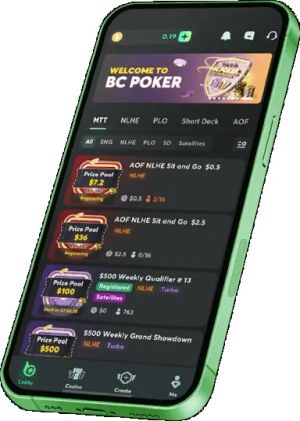
BC Poker APK Review: Mobile Crypto Poker Experience

BC PokerBy Liam Brooks.

Mobile crypto poker has moved from an experimental format to a functional alternative to desktop play. Faster phones, improved app infrastructure, and blockchain payment rails have made it viable to run a serious poker session from a mobile device without accepting material trade-offs in speed or stability. BC Poker APK enters this market as a crypto-native application: built around blockchain transactions and optimized for players who want a full poker environment in a mobile-first format.

App Overview and Installation

The application is distributed as a direct APK download, which is standard for crypto gambling apps outside Google Play content policies. Installation requires enabling third-party app sources in Android settings, a one-time step. iOS access runs through the mobile browser version.

The BC Poker Apk is designed around a single-client architecture: the same account, wallet, and game lobby accessible on desktop is available on mobile without synchronization delays or separate login credentials. The interface scales to screen dimensions rather than using a stripped-down mobile variant, which means no features are hidden behind a desktop-only toggle. Supported devices cover Android 7.0 and above, with performance testing conducted on mid-range hardware to ensure the app does not require high-end specifications.

UI layout uses a bottom navigation structure that keeps primary actions within thumb reach. Table controls, bet sizing, and the time-bank indicator are scaled for touch input, an area where many poker apps fail. The lobby renders game types, stake levels, and player counts in a compact list readable on screens from 5.5 inches upward without zoom.

Gameplay and Features

The game lobby on mobile mirrors the desktop structure: cash game tables organized by variant and stake, a tournament section with scheduled and sit-and-go formats, and a hand history module accessible between sessions. Texas Hold’em and PLO are the primary formats, with cash games covering micro through mid-stakes. Tournament guarantees vary by schedule, with larger events anchored to weekly and monthly calendars.

BC Poker APK handles multi-hour cash game sessions without the memory degradation that affects some competing clients over time. Action timing matches the desktop client, and the bet-sizing interface supports both manual entry and preset fraction buttons, which matters for players using non-standard sizing.

Multi-tabling is supported, with a practical limit of two tables on most phone screens. Portrait orientation is available for single-table play. Tournament notifications for registration windows and blind level changes work with standard app permissions.

Crypto Integration

The payment layer in BC Poker is built around blockchain infrastructure rather than bolted on as an alternative to fiat. Deposits go directly from a user’s external wallet to the platform address, with confirmation times dependent on network congestion rather than operator processing queues. Bitcoin, Ethereum, USDT, and the platform’s native token are supported, covering the primary options most crypto poker players already hold.

What differentiates a genuinely crypto-native platform from a traditional poker room that accepts Bitcoin is how deeply the blockchain integration runs. On a purpose-built crypto poker site like BC Poker, payouts are processed on-chain and settled to user wallets without manual intervention. There is no withdrawal approval queue and no holding period for funds that have cleared the table. For mobile users managing a bankroll across multiple platforms, this settlement model removes a significant friction point.

Blockchain transparency extends to game verification. Provably fair mechanics allow players to audit hand outcomes using the published seed methodology, confirming that card distribution was not altered after bets were placed. This is accessible directly from the mobile app rather than requiring a separate desktop tool.

Pros and Cons

BC Poker APK performs well against the criteria that matter most for a mobile crypto poker client. The strengths are structural: on-chain payments, touch-optimized interface, and anonymous registration are built into the architecture rather than added as options. The limitations are equally structural and common to the category: APK distribution outside official stores, connection dependency, and a crypto onboarding step that adds friction for non-technical users.

Pros:

  • Fast crypto transactions: deposits and withdrawals settle on-chain without manual processing delays.
  • Mobile-first experience: the client is built for touch interaction rather than scaled down from a desktop layout.
  • Anonymous gameplay: registration does not require banking details or government-issued identity documents.
  • Smooth UI and navigation: interface elements are sized for thumb use and remain responsive during multi-hour sessions.

Cons:

  • Limited availability in some regions: regulatory restrictions affect APK access and certain payment options in specific markets.
  • Requires stable internet: mobile poker over inconsistent connections introduces timing issues that affect gameplay.
  • Learning curve for beginners: the crypto wallet onboarding process adds friction for players unfamiliar with blockchain payments.

User Experience and Performance

Performance on mid-range Android hardware shows stable frame rates during table animations and no perceptible input lag. The app manages memory well enough that background processes, such as music or messaging, do not produce the frame drops seen in more resource-intensive poker clients.

Navigation across the lobby, cashier, hand history, and settings follows a consistent menu structure with no buried sub-menus that require more than two taps to reach any primary function. The cashier flow is where the UX investment is most visible: transaction details are presented clearly at each step, including estimated network confirmation times and applicable fees, without requiring users to leave the app to check a blockchain explorer.

Connection drops are handled with a session-resume mechanism rather than a full app reload. A dropped connection during a hand does not force a fold or timeout if the reconnect completes within the time-bank window, which is the correct behavior for a platform targeting mobile-primary players.

Security and Fair Play

The application uses end-to-end encryption for all data transmitted between the client and platform servers. Wallet connections are handled through standard Web3 authentication protocols rather than requiring users to enter private keys into the app directly. Two-factor authentication is available for account access and is recommended for any account carrying a meaningful balance.

RNG follows the provably fair model: server and client seeds are committed before each hand and published afterward, so neither the platform nor any third party can alter outcomes after bets are placed. This is a stronger guarantee than third-party certification alone, which audits the algorithm but does not prevent real-time manipulation. Session time limits and deposit caps are configurable through account settings.

BC Poker APK Review

BC Poker APK delivers on the core requirements of a mobile crypto poker client: stable performance, on-chain payment processing, provably fair mechanics, and an interface built for touch use rather than adapted from desktop. The APK distribution model is a practical reality for crypto gambling apps, not a deficiency, and the installation process is not a meaningful barrier for the target user.

The platform fits players who already hold crypto and want a poker room where blockchain infrastructure is a core feature, not a payment option. It suits mobile-first users, anonymous registration seekers, and anyone who values transaction speed over a wider game catalog. Players unfamiliar with crypto wallet setup will face an onboarding curve, but that friction is external to the app rather than a product of poor design. For the audience it targets, BC Poker APK is a competent and well-executed option in a category that still has few serious competitors.

IMAGE CREDIT: BCpoker.com

BLOG MENU

Beyond the Shoe: How Other Card Games Can Improve Your Blackjack Skills

By PlayWSOP.com.

Here’s a tough one: Is there such a thing as too much blackjack?

Spending a lot of time at the table can sharpen your math and build the necessary muscle memory, but there’s a downside. By playing blackjack and only blackjack, players risk developing tunnel vision that might cost them in the long run, no matter how good they get at counting cards.

WSOP Screen Shot

There’s an easy fix, though. An occasional game of Texas Hold’em or commission baccarat goes a long way toward preventing that, while also building the broader casino awareness needed to excel at the blackjack table.

That’s the topic of today’s little escapade. Think of this article as a kind of nutritional plan, of sorts. We’ll go through which card games to play, in what proportions, and, most importantly, how to approach them to sharpen your blackjack skills.

Poker

If blackjack is a game of hidden information (the dealer’s hole card), then poker is a game of hidden intentions. As such, it’s probably the best companion to any serious blackjack player.

Official poker social platforms like PlayWSOP let you lock horns against other players for free, using chips you receive upon registration and via recurring bonuses. That accessibility makes poker a high-value training ground, and one that carries no financial risk whatsoever.

How to Approach Poker

The value of free poker isn’t in memorizing hand rankings (you probably already know those), but in developing instincts that blackjack alone doesn’t demand.

First, there’s player reading. Blackjack is mostly you versus the math. Poker forces you to process human behavior in real time. Betting patterns, timing, hesitation and confidence all play a crucial role in how the game pans out. Even if blackjack doesn’t require reading opponents directly, it absolutely benefits from your ability to read the room.

Second, emotional control. Poker regularly puts you in high-pressure spots where the correct move still feels uncomfortable. Calling a large bluff with a marginal hand isn’t that different, psychologically, from ramping up your bet when the count spikes. Both require you to trust your system over your instincts.

Finally, decision-making under uncertainty. In blackjack, optimal play is often clear-cut. Not so much in poker. You’re constantly balancing incomplete information. That mental flexibility carries over directly when blackjack conditions deviate from ideal (like rule variations), deck penetration issues, or table distractions.

If you can stay composed while being bluffed in a high-stakes pot, you won’t flinch when the count jumps to +5 and you need to increase your bet in a flash.

Rummy

Rummy doesn’t get nearly enough credit in casino-adjacent discussions as it should. At its core, it’s a game of pattern recognition, memory, and probability tracking, which are the components essential to strong blackjack play.

How to Approach Rummy

At its core, rummy sharpens your ability to track cards over time. Not exactly in the structured way of counting systems, but you’re still observing which cards have been played, which are likely still in circulation, and how that affects your decisions. That’s not far removed from keeping a running count in blackjack, is it?

Occasional rummy also improves your short-term memory. Remembering discards, predicting opponents’ needs, and adjusting your strategy accordingly builds the kind of mental endurance that long blackjack sessions demand.

Another underrated benefit is adaptability. Unlike blackjack, where the correct play is often fixed, rummy requires you to pivot constantly based on evolving information. That trains you to stay mentally flexible, which might prove useful when dealing with unusual blackjack scenarios like side bets, rule changes, or erratic table dynamics.

Baccarat

Baccarat might seem like an odd inclusion. After all, it’s one of the most passive games in the casino. No decisions, no strategy adjustments mid-hand. Just banker, player, or tie.

But that’s exactly why it’s useful.

How to Approach Baccarat

Baccarat is discipline training in its purest form.

Unlike blackjack, where your skill can influence outcomes, baccarat forces you to sit with variance. You can make the statistically correct choice every time (banker bet, ignoring ties), and still lose in the short term. That’s a powerful lesson, one that many blackjack players intellectually understand but emotionally struggle with.

Use baccarat to train patience. Set strict betting rules and follow them without deviation. Forget about chasing losses, switching patterns, or superstitious turn of events. The goal is not to win but to reinforce your ability to stick to the plan.

There’s also a bankroll management angle. Because baccarat is slower and less cognitively demanding, it gives you space to focus purely on bet sizing, session limits, and emotional responses to wins and losses. Those are transferable skills that directly impact your long-term blackjack results.

Think of baccarat as meditation with money on the table. It strips away complexity and forces you to confront your habits.

Your Ideal Training Mix

So how do you put this all together without diluting your blackjack edge?

Blackjack should still dominate your practice time with roughly 70–80%. Nothing can replace direct reps at the table.

But there’s a world beyond basic strategy and poker comes next at around 15–20%. It provides the biggest boost in terms of psychological resilience and decision-making under pressure. Baccarat should take up about 5–10%, plenty of time to reinforce discipline and practice emotional control. Rummy fills in the remaining 5–10%, acting as your cognitive cross-training tool for pattern recognition.

The exact mix can shift depending on your weaknesses. If tilt is your biggest issue, lean more into baccarat. If you struggle with focus during long sessions, increase your time with rummy. If high-pressure decisions rattle you, poker deserves more attention.

Conclusion

Card counting will get you nowhere even if you memorize all card counting systems that exist. Mastery at the blackjack table includes composure, awareness, adaptability, discipline, and other traits you can train outside of the blackjack table.

Poker teaches you to think beyond the cards. Baccarat forces you to trust the process. Rummy builds the mental scaffolding that supports long, focused sessions.

But most of all, all three help you prevent the tunnel vision that sometimes plagues professional blackjack players. Use them strategically, and you’ll return to the shoe sharper, calmer, and more complete as a player.

IMAGE CREDIT: PlayWSOP.com

BLOG MENU

How Hand Reading Improves Poker & Blackjack Decisions

By Sadie Smith.

Walk into any poker room in Las Vegas, and you’ll hear players talk about “putting someone on a range.” That’s hand reading, not psychic ability. It’s disciplined observation backed by logic, and at the poker table, the ability to narrow down what an opponent likely holds can be the difference between calling off a stack and preserving two hours of profit. While blackjack is a different game, the mental framework behind hand reading can sharpen your decision-making there, too.

Man Gambling

What Hand Reading Actually Means in Poker

In poker, hand reading is the process of eliminating impossible holdings and narrowing an opponent’s range based on position, betting patterns, timing, and board texture. If a tight player raises from early position in a $2/$5 game, you’re thinking big pairs, strong Broadway cards, maybe ace-king. When the flop comes low and coordinated, and they check, that range shifts. Each action reveals information.

Strong players track carefully, and many sharpen these skills by playing poker online, where hand histories and quick feedback help refine range reading. They notice who defends blinds too often. Over time, patterns form, and decisions become less emotional and more structured—that’s the edge.

The Psychological Discipline Behind Good Reads

Hand reading is less about brilliance and more about discipline. You resist the urge to hero-call because you’re bored. You don’t convince yourself someone is bluffing just because you want them to be. You ask simple questions. What hands would play this way? What hands would not?

This approach forces you to slow down. Instead of reacting, you analyze. That habit alone improves your win rate. Many losing players have decent instincts but lack structure. Hand reading gives those instincts boundaries.

Applying Hand Reading Principles to Blackjack

Blackjack doesn’t allow you to read opponents’ hidden cards in the same way as poker does. The dealer plays by fixed rules. Other players’ cards don’t directly compete against you. Still, the logic behind hand reading transfers well.

In blackjack, the “range” is the composition of the remaining deck. Card counters formalize this idea, but even casual players can benefit from thinking in probabilities rather than hope. If you know several low cards have been dealt in recent rounds, the deck becomes richer in tens and aces. That should affect how you size bets and evaluate marginal hands.

Reading the Table, Not Just the Cards

Hand reading in poker also involves reading behavior. Who tilts after losing a big pot? Who speeds up when bluffing? That same awareness matters in blackjack, particularly in live settings.

At a crowded table, watch how other players respond to variance. Some double down recklessly after a loss. Others hesitate on basic strategy decisions because they’re rattled. While their mistakes don’t change the math of your hand, they can affect table pace and emotional energy. Staying steady while others spiral is a competitive advantage.

Man with sunglasses playing poker

Pattern Recognition and Betting Decisions

Betting tells a story: A small flop bet followed by a large turn bet narrows a range. A sudden overbet on a safe river often signals polarization. Good hand readers track these shifts and respond accordingly.

Blackjack has fewer moving parts, but betting discipline still matters. If you raise your bet only when you “feel hot,” you’re gambling on emotion. If you raise it because the count supports a higher probability of ten-value cards, you’re applying structured thinking based on expected value. The mindset is similar to narrowing a poker range. You act based on evidence, not mood.

Avoiding Costly Assumptions

Poor hand reading leads to expensive mistakes in poker. That might mean stacking off against a player who never bluffs rivers. In blackjack, it shows up when players deviate from basic strategy because they assume the dealer “has a face card.”

The dealer doesn’t have a personality, the deck doesn’t remember your last loss, and players who internalize this avoid the trap of narrative thinking. They make the statistically correct move even when the last two hands went badly.

Real-World Example: A Cash Game Mindset

Consider a $1/$3 no-limit game: A middle-aged regular raises preflop, continuation bets a dry board, and fires again on the turn when a scare card hits. A recreational player calls down with a second pair because “he could be bluffing.” The regular tables top pair, good kicker, and the caller shrugs and reloads.

That same emotional leak appears in blackjack when a player refuses to hit 16 against a dealer 10 because “it never works.” The math hasn’t changed. The discomfort has.

Sharpening Decision Speed Without Rushing

Experienced poker players don’t tank on every decision. They process information quickly because they’ve trained their pattern recognition. They’ve seen similar spots hundreds of times.

Blackjack rewards that same efficiency. When you know basic strategy cold and understand how deck composition influences edge, decisions become automatic. You’re not hesitating on whether to split eights. You act. Confidence at the table often comes from preparation, not instinct.

Gambling Instructor

Building the Skill Off the Table

You don’t develop hand reading by guessing during live play. Poker players study hand histories, review solver outputs, and discuss spots with stronger players. They treat mistakes as data.

Blackjack players can do the same. Practice basic strategy charts. For card counters, learn how true count conversion works in multi-deck games. Review sessions where you deviated from optimal play and ask why. Treat it like skill development, not entertainment.

Why It Matters for Long-Term Results

At its core, hand reading trains you to think in ranges and probabilities. That mindset carries over to any card game built on incomplete information. Poker makes it obvious. Blackjack makes it subtle. When you replace impulse with analysis, your decisions tighten. You fold more confidently in poker. You stick to correct deviations in blackjack. Over time, that discipline shows up in your bankroll. Not because you guessed right more often, but because you removed avoidable errors.

IMAGE CREDIT: Stock.adobe.com
IMAGE CREDIT: Freepik.com
IMAGE CREDIT: BetMGM.com

BLOG MENU

World Series of Poker 2025: Who Are the Elite WSOP Players in the Game?

WSOPPRESS RELEASE.

With the 56th World Series of Poker in full swing, BonusFinder.com has taken the initiative to identify the top contenders in the realm of poker.

The 56th World Series of Poker was held in Las Vegas from 27 May to 16 July 2025. So, BonusFinder USA, a top resource for casino bonuses and online casino reviews in America, delved into the rich history of this prestigious tournament and highlighted its previous champions.

How did we determine the most successful WSOP players of all time?

Through a thorough examination of the 338 Main Event final tables from the tournament’s inception in 1971, categorized into nine distinct groups, we have identified the most accomplished players in the history of the WSOP.

However, due to the evolving structure of the WSOP over the years, only players who have made it to the Main Event final table in the last three decades (1995-2024) were considered for the top 10 rankings.

Countries boasting the highest number of finalists

Although the World Series of Poker has evolved into a worldwide sensation in the last thirty years, it certainly didn’t start out that way. From 1971 to 1982, all finalists hailed from the US, and prior to 1995, merely five international competitors made it to the Main Event final table. The early years of the tournament saw limited international participation, resulting in historical statistics that are significantly biased towards the US.

Country-wise finalists (1971-2024):

  • United States – 273 finalists
  • United Kingdom – 15
  • Canada – 12
  • France – 7
  • Ireland and Spain – 6 each

Since the tournament’s inception in 1971, the United States has been home to 36 Main Event champions, representing nearly three-quarters of all winners (73.5%).

Who ranks among the top players in the global poker scene?

Each year, the WSOP tournament attracts a multitude of players from around the globe to the tables of skill and strategy. In our quest to identify the elite players in the poker world, we meticulously analyzed data from all 338 Main Event final tables over the last three decades. We ranked these players across nine distinct categories, including total earnings, titles, bracelets, and their consistency at the final table.

#1 Joe McKeehen (USA)

At the pinnacle of our ranking for the finest players in the poker world is Joe McKeehen, recognized for his remarkable versatility and skill demonstrated throughout various WSOP events over the years. Hailing from North Wales, Pennsylvania, McKeehen initially captured the spotlight as a promising online poker player before making his mark in the live tournament arena.

McKeehen achieved flawless results by clinching victory in the 2015 Main Event, with his overall WSOP earnings surpassing $10.6 million. While he has made just one appearance at the Main Event final table, McKeehen has shown remarkable consistency in his performance at WSOP events throughout the years, boasting three bracelets, four circuit rings, seven career titles, 23 final table appearances, and 91 cashes.

Score: 69

#T2 Joe Cada (USA)

In a tie for the runner-up position on our list is Joe Cada. Hailing from Shelby Charter, Michigan, and currently living in Macomb, Cada etched his name in history in 2009 by becoming the youngest player to clinch the WSOP Main Event title, a remarkable achievement that remains unmatched to this day.

Cada achieved an impeccable score in his remarkable victory, amassing over $10 million in prize earnings. He has achieved an impressive milestone with his overall WSOP earnings surpassing $14 million, earning him a perfect ten in the process.

Score: 68

#T2 Phil Hellmuth (USA)

Tying for second place with Joe Cada is none other than the iconic Phil Hellmuth, a true legend in the world of poker.

Hailing from Madison, Wisconsin, and currently residing in California, Hellmuth has dedicated over thirty years to mastering Poker, reaching a career pinnacle with his WSOP victory in the Main Event in 1989.

Nonetheless, his victory in 1989 is excluded from our rankings—only results from 1995 onwards were taken into account, leaving his fifth-place finish in 2001 as his highest Main Event result within the evaluated timeframe.

Either way, Hellmuth made up for this with his astonishing achievement of 17 titles, 17 bracelets, and 80 final table appearances, surpassing any other player in our rankings.

He achieved an impressive milestone with a remarkable total of 215 cashes and has accumulated nearly $18 million over the course of his career. Not forgetting that in 2007, Hellmuth earned his spot in the Poker Hall of Fame, solidifying his status as one of the most successful and well-known figures in the game’s history.

Score: 68

#4 Jonathan Tamayo (USA)

Jonathan Tamayo clinches the fourth spot in our rankings after his impressive triumph in the 2024 Main Event, where he took home a staggering $10 million prize—one of the biggest payouts ever recorded in WSOP history. With career earnings exceeding $11.4 million, he achieved flawless scores across all three categories.

Score: 67

#5 Chris Ferguson (USA)

Completing the top five is the champion of the 2000 Main Event, Chris Ferguson. Hailing from Los Angeles, California, Ferguson has an impressive record with 46 final table appearances, 156 cashes, and over $6.6 million in WSOP earnings, placing him among the elite in nearly every category.

Score: 66

Top 10 WSOP Players

IMAGE CREDIT: Deviantart.com
IMAGE CREDIT: BonusFinder.com

BLOG MENU

How to Adjust Your Poker Strategy at a Soft Table

By Sarah Ovesen.

Finding soft tables is only half the battle. The real money comes from adjusting your strategy to extract maximum value from weaker opponents. Too many solid players make the mistake of sticking to their default strategy regardless of table dynamics.

Against recreational players, your GTO approach goes out the window. These opponents don’t play optimally, so neither should you.1)EDITOR NOTE: In the game of poker, GTO (Game Theory Optimal) strategy refers to a mathematically optimal approach that minimizes losses and maximizes profits against any opponent, regardless of their strategy.

Poker Hand Straight to the Ace

Identifying Soft Table Characteristics

Before adjusting your strategy, confirm you’re actually at a soft table.

Recreational players exhibit specific tendencies that create profitable opportunities:

  • High VPIP numbers across multiple opponents – when 4-5 players see 40%+ of flops
  • Frequent limping instead of raising or folding pre-flop
  • Multiple limpers per hand becoming the standard
  • Low post-flop aggression with excessive checking and calling
  • Players chasing draws they shouldn’t chase
  • Showdowns featuring weak holdings that should have folded earlier

Loosen Your Starting Hand Requirements

Against calling stations, speculative hands gain value while premium hands lose some profitability. Suited connectors, small pocket pairs, and suited aces become more playable because opponents will pay you off when you hit.

Your opening range should expand in position. Late position allows you to see more flops cheaply against players who won’t punish loose play. That 8-7 suited becomes profitable when opponents call down with weak pairs.

Multi-way pots become the norm. Instead of isolating with raises, you’ll often play against 3-4 opponents. This changes your strategy completely – drawing hands go up in value while bluffs become less effective.

Value Betting Becomes Critical

Soft table players call too much. This fundamental leak creates your biggest profit opportunity through aggressive value betting:

  • Bet smaller but more frequently – 50-60% pot instead of 75%
  • Three-barrel more often with strong hands
  • Make thin value bets with marginal holdings like top pair weak kicker
  • Size down when opponents call frequently regardless of bet size
  • Build bigger pots over multiple streets instead of trying to win everything on one street

Bluffing Adjustments

Traditional bluffing loses effectiveness against calling stations. When opponents don’t fold, your bluffs and overconfidence become expensive mistakes.

Target specific opponent types for bluffs. The tight-passive player who’s been folding all night responds to pressure. The loose-passive calling station doesn’t care about your story.

Polarize your betting range. When you bet, have either a strong hand for value or a complete bluff. The middle ground – betting marginal hands – becomes unprofitable against players who call frequently.

Save big bluffs for heads-up situations. Multi-way pots at soft tables almost always have someone with something worth calling with.

Position Becomes Even More Important

Against recreational players, position advantages amplify. Information becomes more valuable when opponents play transparently.

Play more hands in position. Late position lets you see how action develops before making decisions. Weak players telegraph their hand strength through betting patterns and timing tells.

Control pot size from position. When out of position with marginal hands, check frequently. Let opponents build pots when you’re strong, keep them small when you’re weak.

Bankroll Considerations for Soft Games

Soft games create different variance patterns than tough games. Lower win rates but higher volume often balance out, but your bankroll needs to adjust accordingly.

Expect higher variance short-term. Recreational players hit lucky streaks and make unexpected plays. Your edge realizes over larger sample sizes than against predictable opponents. Sessions run longer profitably. When the game is good, stay longer. Soft games don’t appear every day, so maximize your time when you find one.

According to a comprehensive study published in the International Journal of Mental Health and Addiction, successful exploitation of recreational players requires different mathematical approaches than balanced play against stronger opponents.

The research found that professional players adapted their bankroll management strategies specifically for games with higher recreational player concentrations, with variance patterns showing 2.3 times greater short-term fluctuation but more consistent long-term profitability when proper bankroll adjustments were implemented.

The study also revealed that professional players extended their session lengths by an average of 47% when game conditions favored recreational player participation, maximizing their exposure to positive expected value situations

Multi-Table Considerations

Playing multiple soft tables simultaneously requires different skills than multi-tabling against regulars.

Note-taking becomes crucial. Recreational players exhibit consistent leaks across sessions. Track who calls light, who folds to pressure, and who tilts easily.

Table selection trumps volume. One great soft table beats three mediocre ones. Focus on game quality over quantity of tables.

Exploiting Common Recreational Leaks

Understanding how recreational players think helps you exploit their predictable mistakes:

  • Calling stations refuse to fold draws – bet aggressively when draws miss
  • Passive players fear aggression – three-bet light against tight folders
  • Emotional players tilt after bad beats – increase value betting frequency
  • Weak players show strength when strong, weakness when weak
  • Recreational players call with any pair or draw regardless of pot odds
  • Tourist players don’t understand position or betting patterns

Reading Physical and Online Tells

Live and online soft games offer additional information through predictable patterns:

  • Betting patterns correlate directly with hand strength
  • Quick calls usually indicate draws or weak showdown value
  • Long pauses before calls suggest marginal hands
  • Chat complaints about bad beats reveal tilt
  • Physical tells become more obvious with recreational players
  • Timing tells matter more online than against experienced opponents

Session Management

Soft games require different session planning than regular games. These opportunities are finite and should be maximized.

Stay alert for game changes. When recreational players leave and regulars take their seats, your strategy must adjust immediately. Don’t keep playing loose against tough opponents.

Track your hourly rate specifically in soft games. This data helps you identify the most profitable situations and games to seek out.

Avoid fancy play syndrome. Recreational players don’t appreciate clever plays or complex strategies. Simple, straightforward poker wins more money than elaborate bluffs.

Adapting to Different Soft Game Types

Not all soft games are identical. Different types of recreational players require specific adjustments:

  • Tourist games – Feature players unfamiliar with fundamentals, reward basic TAG play
  • Action games – Loose-aggressive recreational players, tighten pre-flop but bet aggressively post-flop
  • Passive games – Full of calling stations, require patience and strong hand selection
  • Drunk/late night games – Extremely loose play, focus on value betting over bluffing
  • Holiday games – Occasional players with poor bankroll management
  • Home games – Social atmosphere where players call lighter to stay involved

Mental Game Adjustments

Playing against recreational players requires different mental approaches than competing against skilled opponents.

Patience becomes paramount. Soft games often involve long periods of folding marginal hands while waiting for profitable spots. The money comes in bursts rather than steady streams.

Emotional control matters more. Bad beats feel worse when they come from obviously poor plays. Remember that these same poor decisions create your long-term profit.

Ego management prevents costly mistakes. Don’t try to prove you’re better by making fancy plays. Winning the maximum amount matters more than winning style points.

IMAGE CREDIT: Freepik.com

BLOG MENU

Footnotes

Footnotes
↑1EDITOR NOTE: In the game of poker, GTO (Game Theory Optimal) strategy refers to a mathematically optimal approach that minimizes losses and maximizes profits against any opponent, regardless of their strategy.

Alex Foxen: Rules of Success of a Famous Poker Player

By Aladár Kollár.

Who else has the moral authority to teach success rules if not someone who has succeeded over and over again? With earnings exceeding $44 million in live tournaments, Alex Foxen certainly understands something about poker playing that anyone who cares to know should find out.

Alex Foxen

However, history knows other outstanding players. Hungarian poker players, such as Andras Nemeth, regularly demonstrate a high level of skill and strategic thinking, gaining recognition in the international arena. Their examples prove that success in poker is not an accident, but the result of hard work and deep analysis.

If you’ve played any live casino online game in Hungary before, you can testify to the hard work it takes to know which live casino you should play with. There are a handful of them, all seeking to grab players’ attention with their exciting offers. When you finally settle for one, it’s another herculean task to get by with live games, especially if winning big is another thing you care about besides the fun.

This is why riding on the shoulders of experts when playing any sporting casino game is good. First, from analytical websites like MightyTips, you get to see live casinos that have been tested and rated by seasoned team members. Second, you can also use the analyses on such websites to determine your betting preferences if you have to. 

Having said that, let’s review who this poker star is before we begin to extract his rules of success for aspiring poker players.

Who is Alex Foxen?

Going by the recent Global Poker Index of players globally, William Alex Foxen is the third-best poker player in the world. He ranks only next to Jesse Lonis and Tony Lin from the US and Spain, respectively, by a narrow margin. Born on February 1, 1991, at Cold Spring Harbor, New York, Alex Foxen age in 2025 is 34 years.

Alex Foxen was educated up to the University level before focusing squarely on poker. His poker journey can be traced to his days in school, where he enjoyed tight ends with the Boston College Eagles. He, however, did not give the game his full attention until he graduated and turned 23 years old.

Even with his not-too-serious approach to poker while studying, Alex shone at the 2012 World Series of Poker Circuit held in New Orleans, US, winning it. He was around 21 years old at that time and was playing only online poker. It was a few years after he turned 23 (2016 to be specific) that he finally transitioned into live poker.

Alex Foxen Career Earnings and Other Achievements

From 2016, when this American poker player chose to venture into live poker, he has recorded tremendous success that cannot be denied. In the 2019 WSOP Main Event, Alex ended in 40th, which stands as his highest ITM Main Event finish to date.

Alex Foxen

He even went on to bag his maiden WSOP bracelet in the recently concluded 2022 WSOP event a win primarily attributed to the Super High Roller event valued at $250,000 and boosting his lifetime earnings to $4,563,700.

In an interview with Poker News after the historic win, he stated: “It really means a lot to me. It’s kind of been a monkey on the back. I’ve always wanted a bracelet. I’ve had some close spots and always been disappointed… this feels like a really special one to get my first in.”

Moving from there to take on Alex Foxen’s World Poker Tour (WPT) journey, he got his maiden breakthrough performance in 2017 finishing second. This win earned him $1,134,000 in the Five Diamond World Poker Classic.

Two years after – 2019 – Alex Foxen net worth grew by $1,694,995, thanks to the first position he clinched from the season 8 of the WPT Five Diamond World Poker Classic. The other career exploits by this poker player are captured in the table below.

Career Achievements of Alex Foxen


World Series of Poker

World Poker Tour

European Poker Tour

Bracelets

3

–

–

Final Tables

7

3

–

Money Finishes

66

18

5

Highest ITM Main Event Finish

40th in 2019

–

–

Alex Foxen Net Worth

The exact figures of Alex Foxen net worth are sketchy, but considering that he’s earned over $42 million from live tournaments as of March 2025, we can conclude that he’s worth several million dollars.

Alex Foxen Pokerstars: Rules of Success

Now, to the main crux of this article, which are the guiding principles behind the success of this poker master, we begin. From Alex’s testimonies and interviews granted to different news outlets, we can extract at least five rules that ensured his prominence on the international poker stage. These are

  1. Mental Strength

Most poker players have past experiences of losses and disappointments, especially in other sports. Without completely removing this inner fear, it somehow gets hard to take risks and move ahead. Alex admitted that he hired a mental coach, Eliot Roe, to help him control emotionally over issues and make him mentally as well as physically fit.

“When you play a sport, you can get really mad and play really hard. However, in poker, if you play very hard, it’s not going to help you.” – Alex Foxen articulates the necessity of balance and playing less emotively.

  1. Study the Game

What many people probably know about Alex Foxen is how he often played many 25K and other high roller tournaments. What they don’t often see is his passion to feature at the highest level and the time he takes to study the game.

Alex Foxen

For him, it was customary to watch livestreamed EPT high rollers, enabling him to understand how things work. Having gained sufficient knowledge of how things work, he then launched out, playing several big tournaments.

  1. Laser Focus: Intensity

The intensity that Alex brings to his games is incredibly amazing. In fact, most opponents fear him for this. From his first WPT Five Diamond Poker Classic, where he won $1,134,000 and came second, to his most recent live poker game, Alex Foxen hasn’t taken things lightly.

“I’m focused on the game very much, and I take it very seriously,” says the millionaire US poker player.

  1. Get Used to Meeting Strangers

If playing live poker games like Alex is your dream, he says you have to train yourself to talk to strangers. Most games involve getting by with up to eight people that you don’t know before, and if you haven’t trained yourself to get comfortable around strangers, your chances of success will be hampered.

  1. Constant Practice

Everyone would agree that success as a professional poker player requires having some inborn talents. However, relying solely on instincts or talents without constant practice will hardly produce the results we see in the GPI players in recent times. All the areas of the game need constant rehearsals to gain mastery and win in big tournaments.

Conclusion

Alex Foxen Pokerstars rules of success may sound straightforward, but are the needed principles to make headway in life. For instance, without committing seriously to a course and becoming focused on it, it would be next to impossible to shine and get recognized. Therefore, if you want your name to be known as a renowned poker player, his rules should also be yours.

IMAGE CREDITS: Aladár Kollár

BLOG MENU

What Poker Rookies Can Learn from Americas Cardroom Pro Chris Moneymaker

By Jane Roth.

Chris Moneymaker’s name is etched into poker history. Best known for winning the 2003 World Series of Poker (WSOP) Main Event after qualifying through an online satellite, Moneymaker sparked a global poker boom. However, his legacy didn’t stop there. More than two decades later, the Tennessee native is still a dominant force at the felt, regularly taking home six-figure prizes and earning respect as a long-time ambassador for Americas Cardroom.

Chris Moneymaker

Most recently, he captured the title at a high-stakes live tournament in Montenegro called the Triton Poker Super High Roller Series, where he bagged $903,000 in prize money. He also placed 10th in the WSOP Paradise Main Event in December 2024, taking home $500,000. As he continues to perform at the highest levels and mentor emerging talent, rookies looking to follow in his footsteps have plenty to learn.

Here are four key lessons poker newcomers can take from Chris Moneymaker’s long and successful career.

1. Study other pros’ strategies

Moneymaker has never stopped learning—and that’s part of what makes him so dangerous. As he told Poker.org’s Craig Tapscott, he regularly seeks feedback from coaches and other professionals, keeping up with the changing dynamics of the game.

“I started studying ranges and different strategies, talking with different pros, getting feedback,” he explained. By picking the brains of other successful players, he stays current with the evolving poker landscape, which now includes YouTube stars like Rampage and Brad Owen. For beginners, this means being a student of the game—watch videos, read forums, and talk strategy with fellow players. The more perspectives you absorb, the sharper your game will be.

2. Try out various online poker formats

Though Moneymaker is often seen at live events, he keeps his skills sharp through regular online play. As he explained in a 2023 interview with So Much Poker, he has always kept a mix between live and online formats, helping him stay adaptable.

New players can follow his lead by participating in accessible online tournaments. Whether you’re playing online poker in Florida, New York, or any state in the US, you can participate in tournaments such as Americas Cardroom’s Sunday Moneymaker. With a $109 buy-in and a guaranteed prize pool of $300,000 (or $500,000 on the last Sunday of the month), it offers a shot at life-changing money. Moneymaker himself has expressed pride in the tournament named after him, saying it’s designed to give players a chance at their own “ordinary-to-extraordinary” poker story.

3. Hone your skills at actual casino tables

Despite his fame, Moneymaker is a regular in low-stakes casino tournaments. “I enjoy playing the lower buy-in events,” he told ESPN. “The players are generally happier; the fields are often easier and you can still win sizable amounts of money.” His presence in affordable events, like the WSOP Daily Deep Stacks, shows that success isn’t about chasing the biggest buy-ins, it’s about getting comfortable in real-world scenarios.

As we discussed in a previous post on Blackjack Versus Poker, the casino is where players are exposed to consistent formats and larger player pools, both of which sharpen core skills. Rookies can also dive into books written by poker players like David Sklansky’s The Theory of Poker to build a strong foundational knowledge of the game. 

4. Discipline is just as important as skill

Skill at the tables is crucial, but without discipline, it doesn’t matter. Moneymaker has emphasized the importance of staying focused, especially during big tournaments like the WSOP Main Event that typically take place in Las Vegas, a popular party city. For instance, this year, the WSOP series will be held at Horseshoe and Paris, both of which are located on the Strip.

“You have no idea how many times I see people who can’t keep their eyes open on a Day 2 because they stayed out partying the night before,” he said in a Poker.org interview. For aspiring champions, this means prioritizing rest, nutrition, and mental clarity. Success comes to those who treat the game like a profession, not a weekend getaway.

For poker rookies serious about making their mark, these lessons from Chris Moneymaker are worth their weight in gold. Learn from the pros, explore all formats, build a strong foundation, and above all, stay disciplined.

AUTHOR BIO: Jane Roth is a freelance writer and researcher. She is interested in all things gaming: tabletop games, video game favorites, and casino classics alike. When she’s not busy trying out new games, you can find Jane reading novels at home.

IMAGE CREDIT: @cmoneym21 on Instagram

BLOG MENU